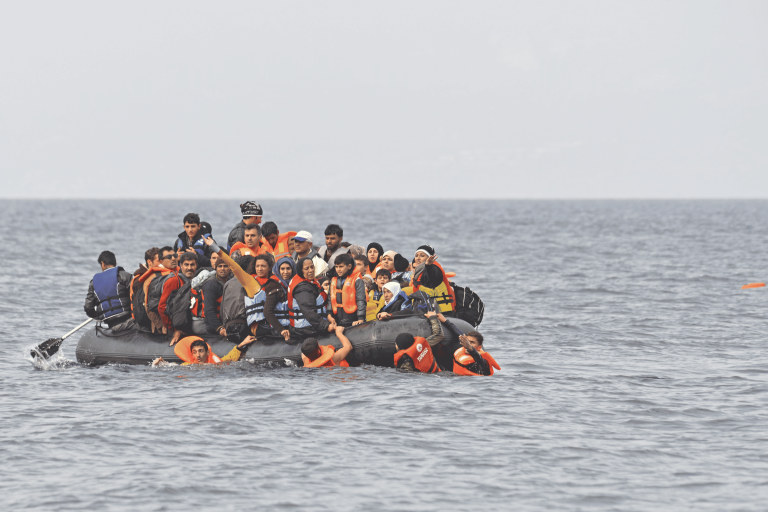
On 24 August 2014, a heavily overcrowded fishing vessel carrying more than 550 people capsized off the coast of Zuwara, Libya, during a rescue operation. While 352 passengers survived, many others drowned. Bodies were recovered in Italy, Tunisia, and Libya, yet a significant number of people remain missing more than a decade later.
This report documents the Zuwara shipwreck and its aftermath from the perspective of families of the missing. It is a family-led, testimony-based account that traces the long search for truth across borders, institutions, and years of uncertainty. Drawing on survivor testimonies, family accounts, open-source information, and engagement with authorities and humanitarian organizations, the report reconstructs what is known about the incident and examines why so many questions remain unanswered.
The findings reveal recurring systemic failures across Italy, Tunisia, and Libya. These include fragmented institutional responses, lack of cross-border coordination, absence of centralized information systems, and limited efforts to identify the deceased or communicate with families. Bodies were buried in unmarked or inaccessible graves, often without proper forensic examination, while families were repeatedly asked to provide information but rarely received follow-up or support.
In the absence of official mechanisms, families organized themselves. Through informal networks and later through the Association of Families of Missing Asylum Seekers (AFOMAS), families became the primary actors in documenting names, preserving memory, and insisting on the right to know. This report challenges narratives that reduce missing migrants to statistics by restoring names, faces, and family histories to the center of documentation.
The report also raises unresolved questions regarding the fate of those still missing, including the possibility that some victims remain inside the unrecovered sunken vessel, which may constitute a mass grave. Despite identifying the wreck’s location, no institutional effort has been made to assess or investigate it.
The report concludes by underscoring states’ obligations under international maritime, human rights, and humanitarian law to rescue, search for, identify, and account for missing persons, and to communicate transparently with families. Addressing the legacy of the Zuwara shipwreck requires coordinated action to ensure truth, dignity, and accountability for the missing and those left behind.